If you are looking for high-quality products, please feel free to contact us and send an inquiry, email: brad@ihpa.net
As a vital inorganic functional product, oxide powder plays an irreplaceable duty in sophisticated ceramics, digital devices, catalytic chemical design and biomedicine. This paper methodically evaluates the physicochemical residential or commercial properties, microstructural features and application distinctions of typical oxide powders such as Al2O2, SiO2, TiO2, ZrO2 and MgO. Research studies have shown that various oxides exhibit dramatically different efficiency characteristics because of their special crystal structure and chemical make-up: Al2O2 is understood for its high firmness and security, ZrO2 has excellent phase modification strengthening buildings, TiO2 displays outstanding photoelectric residential properties, SiO2 has superb surface area adjustability, and MgO shows unique alkaline characteristics. With the growth of nanotechnology, the prep work process of oxide powders has been constantly innovated, and its efficiency policy and application development have actually come to be a research study hotspot in materials science. This paper methodically compares several dimensions, such as crystallographic properties, surface properties, and thermodynamic behavior, to supply an academic basis for product option in design applications.
Physical and chemical homes and practical characteristics
The efficiency differences of oxide powders are first shown in the crystal framework characteristics. Al2O2 exists mainly in the form of α stage (hexagonal close-packed) and γ stage (cubic problem spinel), among which α-Al2O2 has exceptionally high structural stability (melting factor 2054 ℃); SiO2 has numerous crystal forms such as quartz and cristobalite, and its silicon-oxygen tetrahedral structure leads to reduced thermal conductivity; the anatase and rutile structures of TiO2 have substantial differences in photocatalytic performance; the tetragonal and monoclinic stage shifts of ZrO2 are come with by a 3-5% volume modification; the NaCl-type cubic structure of MgO gives it superb alkalinity attributes. In regards to surface properties, the particular surface area of SiO2 produced by the gas stage technique can get to 200-400m TWO/ g, while that of integrated quartz is only 0.5-2m TWO/ g; the equiaxed morphology of Al2O2 powder contributes to sintering densification, and the nano-scale dispersion of ZrO2 can substantially improve the toughness of ceramics.
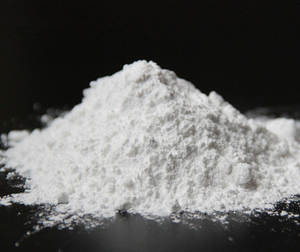
(Oxide Powder)
In regards to thermodynamic and mechanical homes, ZrO two goes through a martensitic phase makeover at high temperatures (> 1170 ° C) and can be completely supported by adding 3mol% Y TWO O SIX; the thermal expansion coefficient of Al two O TWO (8.1 × 10 ⁻⁶/ K) matches well with the majority of metals; the Vickers solidity of α-Al two O three can reach 20GPa, making it a crucial wear-resistant product; partly supported ZrO two raises the fracture strength to above 10MPa · m ONE/ ² through a stage makeover strengthening device. In regards to useful residential or commercial properties, the bandgap width of TiO ₂ (3.2 eV for anatase and 3.0 eV for rutile) establishes its outstanding ultraviolet light response characteristics; the oxygen ion conductivity of ZrO TWO (σ=0.1S/cm@1000℃) makes it the front runner for SOFC electrolytes; the high resistivity of α-Al two O SIX (> 10 ¹⁴ Ω · cm) meets the requirements of insulation packaging.
Application fields and chemical security
In the field of structural ceramics, high-purity α-Al two O SIX (> 99.5%) is used for cutting tools and armor security, and its flexing toughness can reach 500MPa; Y-TZP shows outstanding biocompatibility in dental repairs; MgO partly maintained ZrO ₂ is made use of for engine parts, and its temperature resistance can reach 1400 ℃. In terms of catalysis and provider, the huge specific surface area of γ-Al ₂ O FOUR (150-300m ²/ g)makes it a top notch catalyst provider; the photocatalytic activity of TiO ₂ is greater than 85% effective in ecological filtration; CeO TWO-ZrO two strong solution is utilized in car three-way stimulants, and the oxygen storage space ability reaches 300μmol/ g.
A contrast of chemical security reveals that α-Al two O six has excellent deterioration resistance in the pH range of 3-11; ZrO ₂ shows outstanding deterioration resistance to molten steel; SiO ₂ liquifies at a price of approximately 10 ⁻⁶ g/(m TWO · s) in an alkaline environment. In terms of surface area sensitivity, the alkaline surface of MgO can successfully adsorb acidic gases; the surface silanol teams of SiO TWO (4-6/ nm TWO) give adjustment sites; the surface area oxygen openings of ZrO ₂ are the architectural basis of its catalytic task.
Prep work procedure and price analysis
The preparation process substantially affects the performance of oxide powders. SiO ₂ prepared by the sol-gel technique has a controlled mesoporous structure (pore size 2-50nm); Al two O five powder prepared by plasma technique can reach 99.99% purity; TiO ₂ nanorods manufactured by the hydrothermal approach have an adjustable element ratio (5-20). The post-treatment procedure is likewise vital: calcination temperature has a crucial impact on Al two O six stage transition; round milling can lower ZrO two bit dimension from micron degree to below 100nm; surface area modification can significantly enhance the dispersibility of SiO two in polymers.
In regards to expense and automation, industrial-grade Al two O THREE (1.5 − 3/kg) has significant expense advantages ; High Purtiy ZrO2 ( 1.5 − 3/kg ) additionally does ; High Purtiy ZrO2 (50-100/ kg) is significantly affected by uncommon planet additives; gas phase SiO TWO ($10-30/ kg) is 3-5 times much more expensive than the rainfall approach. In terms of large-scale manufacturing, the Bayer process of Al ₂ O three is fully grown, with an annual production ability of over one million lots; the chlor-alkali procedure of ZrO ₂ has high power consumption (> 30kWh/kg); the chlorination procedure of TiO ₂ encounters environmental pressure.
Arising applications and advancement trends
In the power field, Li four Ti ₅ O ₁₂ has zero strain characteristics as a negative electrode product; the efficiency of TiO ₂ nanotube ranges in perovskite solar batteries exceeds 18%. In biomedicine, the tiredness life of ZrO two implants goes beyond 10 ⁷ cycles; nano-MgO exhibits antibacterial homes (antibacterial rate > 99%); the drug loading of mesoporous SiO two can get to 300mg/g.

(Oxide Powder)
Future development instructions include establishing brand-new doping systems (such as high worsening oxides), exactly regulating surface area discontinuation teams, creating green and low-priced prep work processes, and checking out new cross-scale composite systems. Through multi-scale architectural law and user interface engineering, the performance boundaries of oxide powders will remain to broaden, offering more advanced material services for brand-new energy, environmental governance, biomedicine and other areas. In functional applications, it is needed to thoroughly consider the innate buildings of the material, process problems and expense elements to pick one of the most suitable type of oxide powder. Al Two O three is suitable for high mechanical anxiety settings, ZrO ₂ appropriates for the biomedical area, TiO two has evident benefits in photocatalysis, SiO two is an optimal service provider product, and MgO appropriates for special chemical reaction atmospheres. With the development of characterization innovation and prep work modern technology, the efficiency optimization and application growth of oxide powders will usher in innovations.
Distributor
RBOSCHCO is a trusted global chemical material supplier & manufacturer with over 12 years experience in providing super high-quality chemicals and Nanomaterials. The company export to many countries, such as USA, Canada, Europe, UAE, South Africa,Tanzania,Kenya,Egypt,Nigeria,Cameroon,Uganda,Turkey,Mexico,Azerbaijan,Belgium,Cyprus,Czech Republic, Brazil, Chile, Argentina, Dubai, Japan, Korea, Vietnam, Thailand, Malaysia, Indonesia, Australia,Germany, France, Italy, Portugal etc. As a leading nanotechnology development manufacturer, RBOSCHCO dominates the market. Our professional work team provides perfect solutions to help improve the efficiency of various industries, create value, and easily cope with various challenges. If you are looking for Powdered sodium silicate, liquid sodium silicate, water glass,please send an email to: sales1@rboschco.com
All articles and pictures are from the Internet. If there are any copyright issues, please contact us in time to delete.
Inquiry us