If you are looking for high-quality products, please feel free to contact us and send an inquiry, email: brad@ihpa.net
Product Introduction
Advanced structural porcelains, as a result of their distinct crystal structure and chemical bond qualities, reveal performance benefits that metals and polymer products can not match in extreme settings. Alumina (Al Two O SIX), zirconium oxide (ZrO TWO), silicon carbide (SiC) and silicon nitride (Si three N FOUR) are the four significant mainstream engineering ceramics, and there are necessary distinctions in their microstructures: Al ₂ O six belongs to the hexagonal crystal system and depends on solid ionic bonds; ZrO two has three crystal kinds: monoclinic (m), tetragonal (t) and cubic (c), and gets unique mechanical properties via phase modification toughening device; SiC and Si Two N four are non-oxide porcelains with covalent bonds as the primary element, and have more powerful chemical stability. These architectural differences straight cause substantial distinctions in the preparation procedure, physical residential or commercial properties and engineering applications of the four. This article will methodically assess the preparation-structure-performance relationship of these 4 ceramics from the point of view of materials scientific research, and explore their potential customers for commercial application.
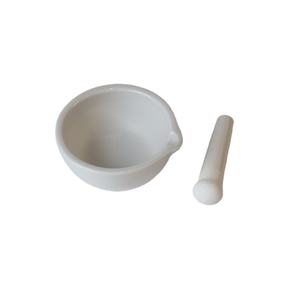
(Alumina Ceramic)
Prep work procedure and microstructure control
In terms of prep work procedure, the 4 ceramics show obvious distinctions in technical courses. Alumina porcelains make use of a fairly typical sintering procedure, normally utilizing α-Al ₂ O six powder with a purity of more than 99.5%, and sintering at 1600-1800 ° C after dry pressing. The trick to its microstructure control is to inhibit unusual grain growth, and 0.1-0.5 wt% MgO is normally added as a grain border diffusion prevention. Zirconia porcelains require to present stabilizers such as 3mol% Y TWO O ₃ to keep the metastable tetragonal phase (t-ZrO ₂), and make use of low-temperature sintering at 1450-1550 ° C to stay clear of extreme grain development. The core procedure challenge lies in precisely managing the t → m phase transition temperature level window (Ms factor). Given that silicon carbide has a covalent bond proportion of up to 88%, solid-state sintering requires a high temperature of more than 2100 ° C and depends on sintering aids such as B-C-Al to create a fluid stage. The response sintering method (RBSC) can attain densification at 1400 ° C by infiltrating Si+C preforms with silicon thaw, however 5-15% free Si will certainly continue to be. The prep work of silicon nitride is one of the most complicated, typically utilizing GPS (gas stress sintering) or HIP (hot isostatic pressing) processes, including Y ₂ O ₃-Al ₂ O six series sintering help to create an intercrystalline glass stage, and warmth treatment after sintering to take shape the glass phase can considerably boost high-temperature performance.
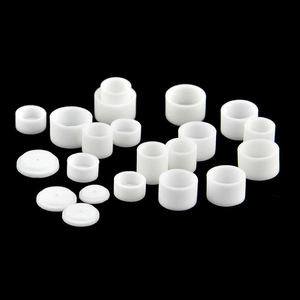
( Zirconia Ceramic)
Comparison of mechanical homes and reinforcing device
Mechanical buildings are the core analysis indications of architectural ceramics. The 4 kinds of materials reveal completely various strengthening systems:
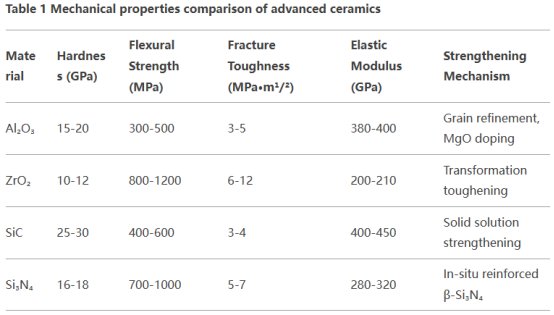
( Mechanical properties comparison of advanced ceramics)
Alumina generally counts on fine grain conditioning. When the grain dimension is reduced from 10μm to 1μm, the strength can be boosted by 2-3 times. The exceptional sturdiness of zirconia comes from the stress-induced phase transformation mechanism. The stress field at the split suggestion sets off the t → m stage change come with by a 4% volume expansion, leading to a compressive stress securing result. Silicon carbide can boost the grain boundary bonding toughness through solid option of aspects such as Al-N-B, while the rod-shaped β-Si two N four grains of silicon nitride can create a pull-out result comparable to fiber toughening. Crack deflection and linking add to the enhancement of sturdiness. It deserves keeping in mind that by creating multiphase porcelains such as ZrO ₂-Si Three N ₄ or SiC-Al ₂ O THREE, a selection of toughening devices can be collaborated to make KIC surpass 15MPa · m 1ST/ TWO.
Thermophysical residential properties and high-temperature actions
High-temperature stability is the crucial benefit of structural porcelains that distinguishes them from standard products:
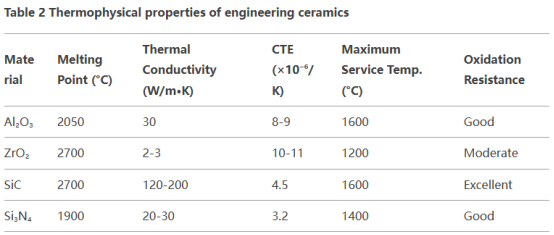
(Thermophysical properties of engineering ceramics)
Silicon carbide exhibits the very best thermal monitoring performance, with a thermal conductivity of as much as 170W/m · K(similar to aluminum alloy), which is because of its easy Si-C tetrahedral framework and high phonon proliferation price. The low thermal expansion coefficient of silicon nitride (3.2 × 10 ⁻⁶/ K) makes it have superb thermal shock resistance, and the critical ΔT value can reach 800 ° C, which is specifically appropriate for duplicated thermal biking atmospheres. Although zirconium oxide has the highest possible melting factor, the softening of the grain limit glass stage at heat will certainly trigger a sharp drop in strength. By adopting nano-composite technology, it can be enhanced to 1500 ° C and still maintain 500MPa stamina. Alumina will certainly experience grain border slide over 1000 ° C, and the addition of nano ZrO ₂ can form a pinning impact to prevent high-temperature creep.
Chemical stability and rust actions
In a destructive atmosphere, the 4 kinds of porcelains exhibit considerably various failure systems. Alumina will certainly liquify externally in solid acid (pH <2) and strong alkali (pH > 12) remedies, and the deterioration price increases greatly with raising temperature level, reaching 1mm/year in steaming concentrated hydrochloric acid. Zirconia has good resistance to not natural acids, however will undertake reduced temperature level destruction (LTD) in water vapor environments above 300 ° C, and the t → m stage shift will lead to the development of a tiny fracture network. The SiO two protective layer formed on the surface area of silicon carbide gives it superb oxidation resistance below 1200 ° C, however soluble silicates will certainly be created in liquified alkali metal settings. The corrosion habits of silicon nitride is anisotropic, and the corrosion price along the c-axis is 3-5 times that of the a-axis. NH Four and Si(OH)four will be generated in high-temperature and high-pressure water vapor, causing material cleavage. By enhancing the structure, such as preparing O’-SiAlON porcelains, the alkali deterioration resistance can be boosted by more than 10 times.
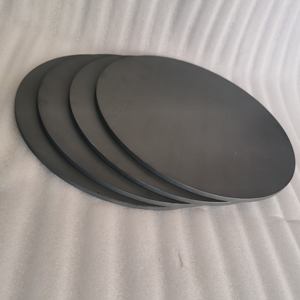
( Silicon Carbide Disc)
Regular Engineering Applications and Situation Studies
In the aerospace area, NASA makes use of reaction-sintered SiC for the leading edge parts of the X-43A hypersonic aircraft, which can withstand 1700 ° C wind resistant home heating. GE Air travel utilizes HIP-Si six N ₄ to manufacture wind turbine rotor blades, which is 60% lighter than nickel-based alloys and allows greater operating temperature levels. In the clinical field, the crack stamina of 3Y-TZP zirconia all-ceramic crowns has gotten to 1400MPa, and the life span can be reached greater than 15 years with surface slope nano-processing. In the semiconductor market, high-purity Al ₂ O four porcelains (99.99%) are utilized as cavity products for wafer etching equipment, and the plasma deterioration rate is <0.1μm/hour. The SiC-Al₂O₃ composite armor developed by Kyocera in Japan can achieve a V50 ballistic limit of 1800m/s, which is 30% thinner than traditional Al₂O₃ armor.
Technical challenges and development trends
The main technical bottlenecks currently faced include: long-term aging of zirconia (strength decay of 30-50% after 10 years), sintering deformation control of large-size SiC ceramics (warpage of > 500mm components < 0.1 mm ), and high production cost of silicon nitride(aerospace-grade HIP-Si four N four gets to $ 2000/kg). The frontier development instructions are concentrated on: ① Bionic framework style(such as covering layered structure to enhance durability by 5 times); ② Ultra-high temperature level sintering innovation( such as trigger plasma sintering can achieve densification within 10 mins); ③ Smart self-healing porcelains (including low-temperature eutectic phase can self-heal fractures at 800 ° C); four Additive manufacturing innovation (photocuring 3D printing precision has reached ± 25μm).
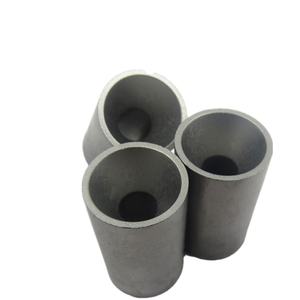
( Silicon Nitride Ceramics Tube)
Future development fads
In a thorough comparison, alumina will certainly still dominate the standard ceramic market with its price benefit, zirconia is irreplaceable in the biomedical area, silicon carbide is the preferred product for severe settings, and silicon nitride has great possible in the area of premium tools. In the next 5-10 years, via the integration of multi-scale architectural regulation and intelligent production innovation, the efficiency boundaries of engineering porcelains are expected to achieve new breakthroughs: as an example, the style of nano-layered SiC/C porcelains can accomplish sturdiness of 15MPa · m ONE/ TWO, and the thermal conductivity of graphene-modified Al ₂ O ₃ can be enhanced to 65W/m · K. With the innovation of the “twin carbon” method, the application range of these high-performance ceramics in brand-new energy (fuel cell diaphragms, hydrogen storage space products), environment-friendly manufacturing (wear-resistant components life raised by 3-5 times) and various other areas is anticipated to keep a typical yearly development rate of more than 12%.
Vendor
Advanced Ceramics founded on October 17, 2012, is a high-tech enterprise committed to the research and development, production, processing, sales and technical services of ceramic relative materials and products. Our products includes but not limited to Boron Carbide Ceramic Products, Boron Nitride Ceramic Products, Silicon Carbide Ceramic Products, Silicon Nitride Ceramic Products, Zirconium Dioxide Ceramic Products, etc. If you are interested in boron nitride insulator, please feel free to contact us.(nanotrun@yahoo.com)
All articles and pictures are from the Internet. If there are any copyright issues, please contact us in time to delete.
Inquiry us