If you are looking for high-quality products, please feel free to contact us and send an inquiry, email: brad@ihpa.net
Introduction to Concrete Additives: Enhancing Efficiency from Within
Concrete ingredients– also referred to as concrete admixtures– are chemical or mineral materials included little amounts during the mixing stage to change the residential properties of fresh and hardened concrete. These additives play a critical function in contemporary building and construction by improving workability, increasing or hampering setting time, boosting longevity, and lowering ecological influence. As infrastructure demands grow more facility, driven by urbanization and climate durability requires, concrete additives have ended up being important tools for designers and architects seeking lasting, high-performance building services.

(Concrete Addtives)
Category and Functional Duties of Concrete Additives
Concrete additives are generally identified into 4 groups: chemical admixtures, mineral admixtures, specialty additives, and functional admixtures. Chemical admixtures consist of water reducers, superplasticizers, retarders, accelerators, air-entraining agents, and deterioration inhibitors. Mineral admixtures such as fly ash, slag, silica fume, and metakaolin enhance cementitious performance with pozzolanic responses. Specialty ingredients like fibers, pigments, and shrinking reducers offer tailored enhancements for specific applications. With each other, these ingredients enable exact control over concrete actions, enabling maximized mix layouts for diverse engineering atmospheres.
Devices Behind Improved Workability and Sturdiness
One of the most considerable contributions of concrete ingredients is their ability to boost workability without enhancing water material. Superplasticizers, especially polycarboxylate ether (PCE)-based types, spread concrete bits at the molecular level, resulting in liquid yet steady mixes that can be pumped over fars away or cast right into elaborate kinds. Concurrently, additives like viscosity modifiers and air-entraining representatives boost communication and freeze-thaw resistance, respectively. In aggressive settings, deterioration inhibitors secure ingrained steel reinforcement, expanding service life and lowering lifecycle upkeep expenses.
Role in Sustainable and Eco-friendly Concrete Development
Concrete ingredients are pivotal ahead of time sustainability within the building industry. By enabling the use of industrial results like fly ash and slag, they reduce dependence on Portland cement– a major source of international CO ₂ discharges. Water-reducing and superplasticizer ingredients help with the growth of ultra-high-performance concrete (UHPC) with minimal ecological footprint. Carbon-capture admixtures and bio-based plasticizers even more push the boundaries of environmentally friendly construction products. With growing governing pressure and environment-friendly building accreditation standards, additives are coming to be central to low-carbon concrete techniques worldwide.
Impact on Specialized Building Applications
In specialized construction fields, concrete ingredients allow efficiency levels formerly thought unattainable. Underwater concreting benefits from anti-washout admixtures that prevent material loss in immersed conditions. Tunnel linings and shotcrete count on accelerators and fiber reinforcements to accomplish rapid strength gain and fracture resistance. Self-healing concrete solutions incorporate microcapsules or germs that turn on upon crack formation, offering independent repair work mechanisms. In seismic areas, damping additives improve energy absorption and architectural durability. These advancements highlight how ingredients extend concrete’s applicability beyond traditional uses.
Technical Developments and Smart Admixture Systems
The concrete additive landscape is undertaking a change driven by nanotechnology, polymer scientific research, and digital assimilation. Nanoparticle-based additives such as nano-silica and graphene-enhanced admixtures improve pore structure and increase mechanical stamina. Reactive polymers and encapsulated phase-change products are being created to enhance thermal law and longevity. On the other hand, wise admixtures equipped with sensors or responsive release mechanisms are emerging, allowing real-time surveillance and flexible habits in concrete frameworks. These innovations signify a shift toward intelligent, performance-tuned building products.
Market Dynamics and Global Market Trends
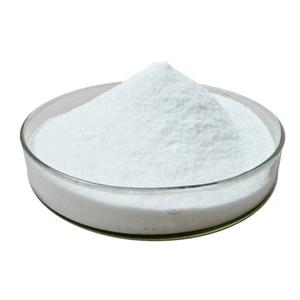
( Concrete Addtives)
The international market for concrete ingredients is increasing quickly, fueled by framework investments in Asia-Pacific, The United States And Canada, and the Center East. Demand is also increasing due to the development of premade building and construction, 3D-printed buildings, and modular real estate. Key players are focusing on product diversification, local expansion, and conformity with progressing ecological guidelines. Mergers and collaborations between chemical vendors and building and construction technology firms are speeding up R&D efforts. In addition, electronic systems for admixture optimization and AI-driven formulation devices are getting grip, boosting precision in mix layout and execution.
Challenges and Environmental Factors To Consider
Despite their advantages, concrete ingredients encounter obstacles pertaining to set you back, compatibility, and environmental effect. Some high-performance admixtures remain costly, restricting their adoption in budget-constrained projects. Compatibility problems in between different ingredients and concretes can result in inconsistent performance or unintentional side effects. From an ecological viewpoint, issues continue pertaining to the biodegradability of artificial polymers and the potential leaching of residual chemicals into groundwater. Attending to these concerns needs proceeded innovation in green chemistry and lifecycle analysis of admixture systems.
The Roadway Ahead: Assimilation with Digital and Round Building Versions
Looking ahead, concrete additives will certainly play a crucial duty fit the future of building via combination with digital modern technologies and circular economic situation principles. IoT-enabled dispensing systems and BIM-integrated admixture management systems will certainly enhance dosing accuracy and resource performance. Bio-based, recyclable, and carbon-negative additives will align with net-zero goals across the built environment. Furthermore, the merging of additive technology with robotics, AI, and advanced production strategies will open new frontiers in sustainable, high-performance concrete building.
Provider
Concrete additives can improve the working performance of concrete, improve mechanical properties, adjust setting time, improve durability and save materials and costs. Cabr-concrete is a supplier of foaming agents and other concrete additives, which is concrete and relative products with over 12 years experience in nano-building energy conservation and nanotechnology development. It accepts payment via Credit Card, T/T, West Union and Paypal. Trunnano will ship the goods to customers overseas through FedEx, DHL, by air, or by sea. If you are looking for high quality cellular concrete foaming agent, please feel free to contact us and send an inquiry. (sales@cabr-concrete.com). Tags: concrete, concrete addtives, foaming agents
All articles and pictures are from the Internet. If there are any copyright issues, please contact us in time to delete.
Inquiry us